
Among the rolling hills of Barbaresco, surrounded by vineyards and a landscape that reveals the character of this prestigious wine region, lies Bruno Rocca winery. A family estate deeply connected to the history of Nebbiolo and, in particular, to the renowned Rabajà vineyard, which plays a central role in the identity of its wines.
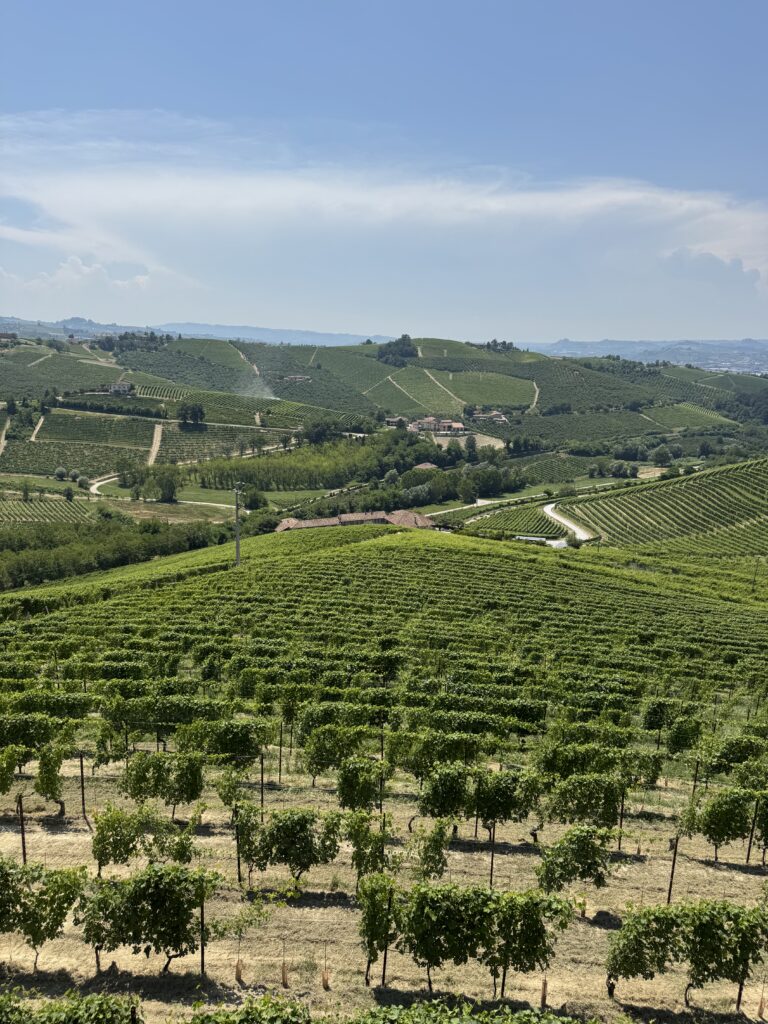
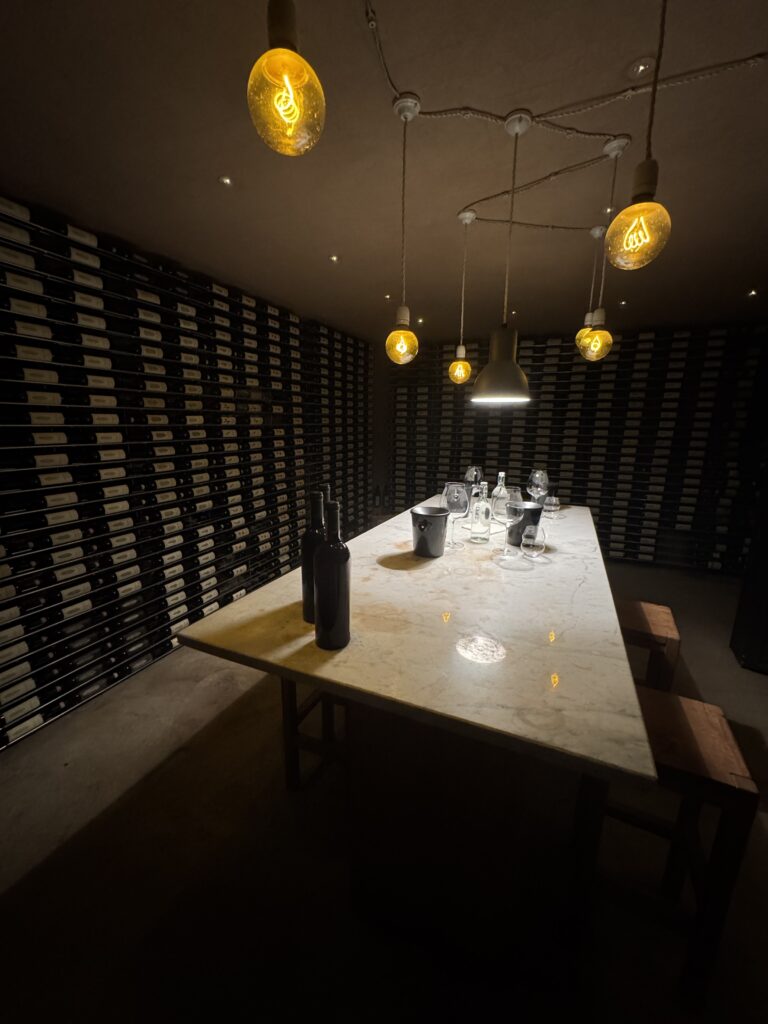
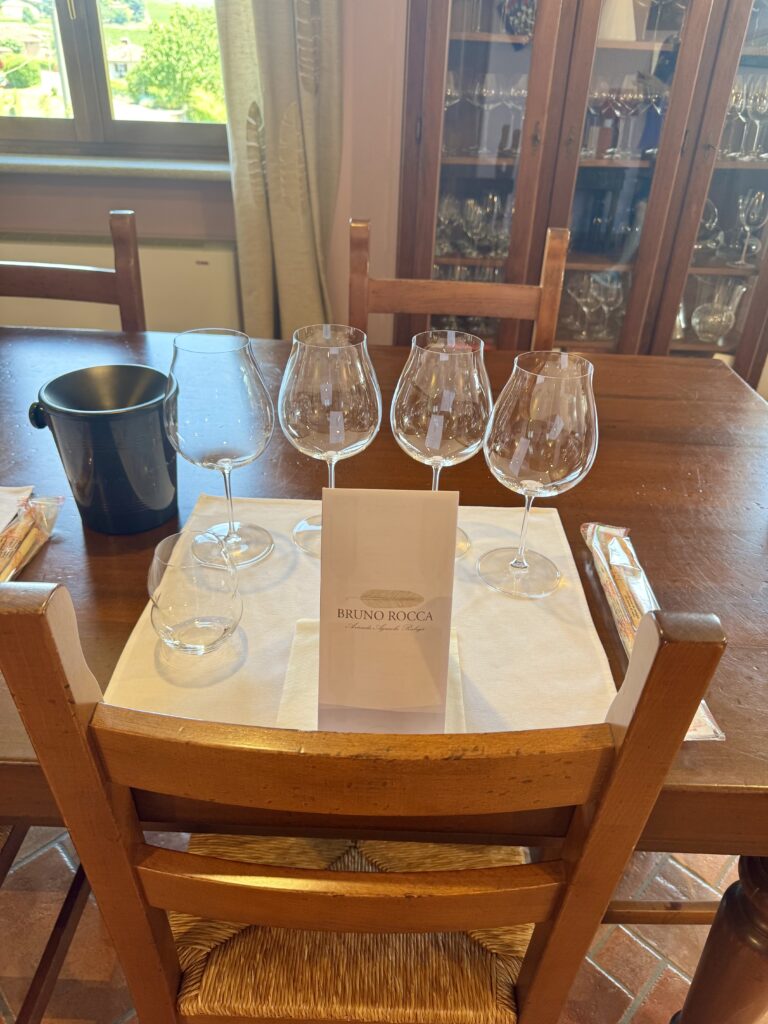
Our visit began with a warm welcome and spectacular views over the hills of Barbaresco. From the winery, we could admire the landscape and identify some of the vineyard plots that make this area so special. We then explored the facilities, discovered the winemaking areas and the carefully maintained bottle library, before ending with a tasting in a beautiful room where the wood and traditional atmosphere provided the perfect setting to enjoy the wines
A Family History Rooted in Barbaresco
The history of Bruno Rocca is closely linked to Barbaresco and its vineyards. The Rocca family has had roots in the area since the 19th century, and in 1958 they acquired plots in Rabajà, one of the appellation’s most renowned vineyards. This site would eventually become a fundamental part of the winery’s identity.
In 1978, Bruno Rocca began producing and bottling wine under his own name, giving new momentum to the family project. His commitment to expressing the character of the vineyards and the personality of Nebbiolo helped establish the winery’s reputation among Barbaresco’s leading producers.
Today, Bruno Rocca continues to work alongside his children, Luisa and Francesco, combining family experience with a contemporary outlook. The Rabajà vineyard remains one of the key elements of their production, although the wines also showcase other expressions of the region. The winery’s philosophy is based on respecting the origin of each grape and conveying the character of the Barbaresco hills in every glass
Exploring the Winery and Its Spaces
One of the highlights of the visit was discovering the winery from the inside and learning about the places where the wines are born and evolve. The tour began with breathtaking views of the Barbaresco hills and vineyards, a landscape that helps explain the importance of terroir in shaping each wine’s personality.
During the visit, we saw the fermentation tanks and a beautifully maintained bottle library, a testament to the winery’s work and the evolution of its wines over time. We also explored the barrel rooms, where the wines rest and develop their complexity.
The visit concluded in a beautiful tasting room, decorated with wood and featuring a warm, traditional atmosphere. It was a charming setting in which to sit back, enjoy the estate’s wines and discover more about Barbaresco through each glass
The Tasting: Precision, Balance and Character
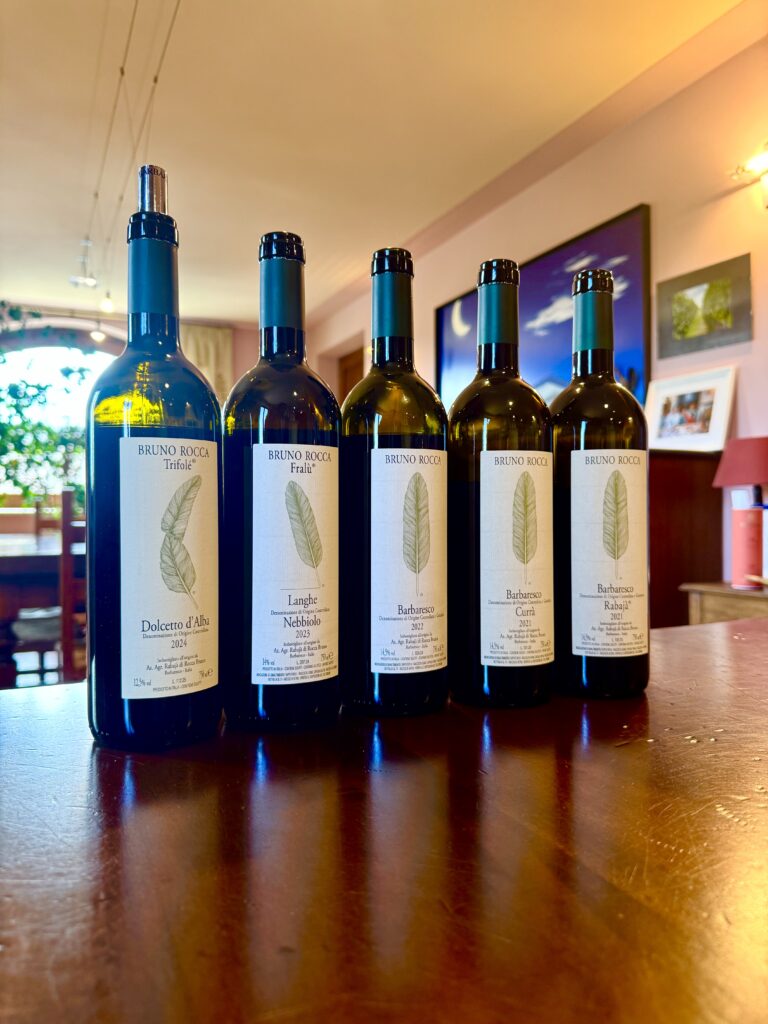
The tasting was the perfect finale to our visit to Bruno Rocca. We tried five wines — Dolcetto d’Alba 2024, Langhe Nebbiolo 2023, Barbaresco 2022, Barbaresco Currà 2021 and Barbaresco Rabajà 2021 — and they all left me with the same impression: quality, precision and balance.
The range felt exceptionally well crafted, with defined, harmonious wines and no flaws that detracted from the tasting. Despite the differences between grape varieties, vintages and vineyards, I found a consistently high level of quality, something I particularly appreciated throughout the experience.
The two single-vineyard Barbaresco wines, Currà 2021 and Rabajà 2021, were the ones that impressed me most. Both struck me as outstanding wines, although, purely as a matter of personal preference, I leaned slightly towards Currà. This is a subjective choice: the expression of each vineyard can vary depending on the vintage and the producer’s approach, and that is precisely part of what makes discovering these wines so interesting.
The tasting left me with a very positive impression of Bruno Rocca: a winery capable of producing precise, balanced wines with a clear identity and a consistently high standard across the range
Barbaresco in Its Purest Form
Visiting Bruno Rocca allowed us to experience Barbaresco from a different perspective: taking in the hills from the winery itself, discovering the spaces where the wines are made and aged, and finally assessing the precision of the family’s work in the glass.
I was particularly impressed by the consistency across the range. From the Dolcetto to the two single-vineyard Barbaresco wines, everything showed a solid level of quality and a balance that made the tasting especially rewarding. Currà was my favourite, although Rabajà was also outstanding. Rather than trying to decide which is better, I came away appreciating the different expressions of two vineyards and how these can change from one vintage to another.
Bruno Rocca is one of those wineries that helps explain why Barbaresco holds such appeal for wine lovers: a region with a strong identity, where details matter and where every bottle deserves time and attention
